Categories
daycare

Benefits of Project-Based Play in Daycare Learning Center in Westchester

In a busy classroom, mornings often begin quietly. Children arrive, find their favorite corner, and start to explore. A few build with blocks. Others watch light move across the floor or collect crayons that roll off the table. Teachers walk among them, listening for the small moments that can grow into something more.

At our daycare learning center in Westchester, those moments are where project-based play begins. It isn’t a planned lesson or a task to finish. It’s a way for children to follow their curiosity and turn it into something meaningful.


How Curiosity Becomes Learning

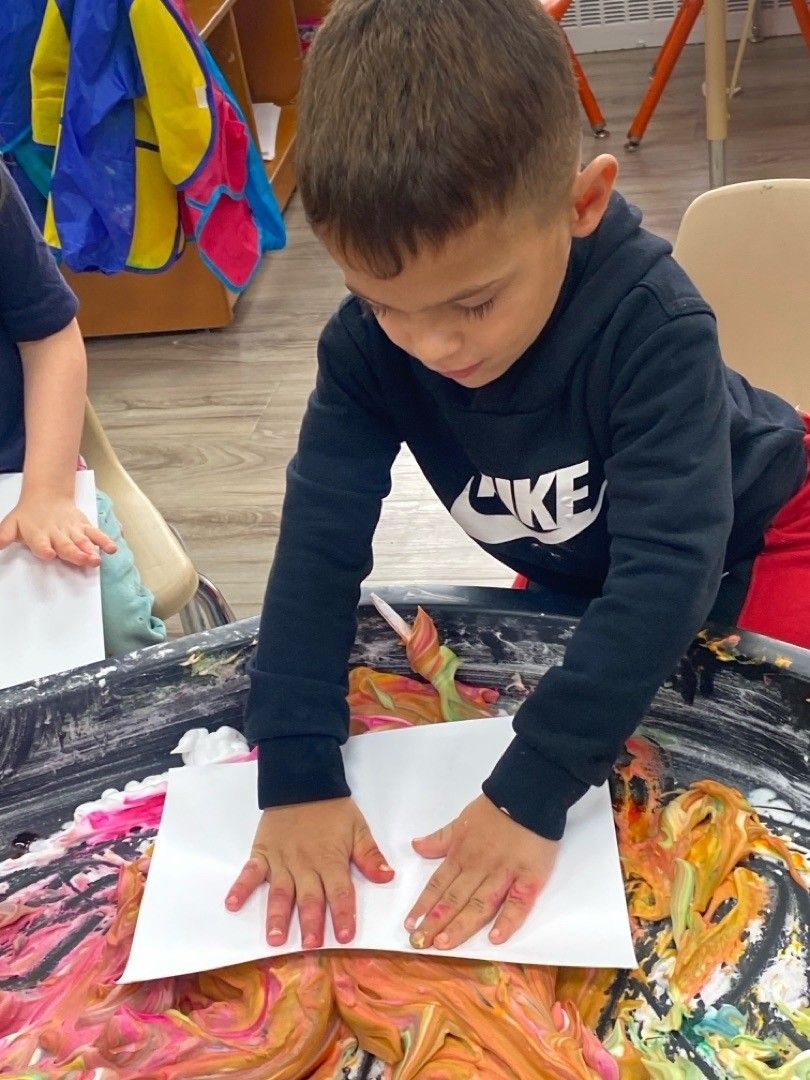
Sometimes a project starts with a question – why does a leaf float or why does paint mix into new colors? Teachers notice these questions and build around them. They might bring in water tubs, brushes, or mirrors. The children gather, talk, and try things out.

Before long, play becomes an experiment. They guess, test, and see what happens. The learning hides inside the laughter. A child is practicing measurement when they pour water into a cup. Building a tower is another way to experiment with design and balance. 


Learning by Doing

When children take the lead, mistakes don’t stop them. Paint spills, towers fall, and ideas shift halfway through. Teachers stay nearby, asking, “What do you think we could try now?” That question opens the door for problem-solving.

A bridge that doesn’t stand the first time turns into something sturdier the next. Each small success builds patience and pride. Parents often tell us their children start to bring that same attitude home, trying things again and again until they work, and enjoying the process along the way.


Growing and Working Together

Project-based play also teaches children how to work with others. They share space, trade ideas, and learn to listen. A quiet child might begin speaking up when planning a group project. Another learns to wait or help a friend.

We often hear that these habits show up at home too. Families notice their children explaining how things work, creating “experiments” in the kitchen, or retelling stories from school. It’s a sign that learning has become part of who they are.


Final Thought

At our daycare learning center in Westchester, project-based play gives children room to wonder, test, and grow. They build ideas with their hands and confidence in their hearts. By following their curiosity, they learn that play and learning can be one and the same, and that discovery can happen every single day.


Frequently Asked Questions

What is project-based play?

Project-based play is an educational approach in which teachers follow the interests of the students and lead them in experiential learning that results in discovery and 

How does it support development?

Project-based play helps children naturally strengthen a wide range of skills, including but not limited to language, math, and science skills while also building patience, focus, and teamwork.

Why do families in Westchester value project-based play?

Families in Westchester value project-based play because it’s joyful and real. Children come home eager to show what they’ve made and talk about what they discovered that day.

Categories
daycare

Why Families Choose Baby Daycare in Irvington Over Home Care

Parents in Irvington often go back and forth on the same question: is it better to keep a baby at home with a nanny or relative, or to choose a baby daycare in Irvington? Both provide care and safety, but the daily experience looks very different. Families often discover that daycare offers something more than home care can.


Routines That Help Babies Settle

Babies are creatures of habit. At daycare, naps, bottles, and play happen in a steady rhythm. Not every child has the same schedule, but the flow of the day is predictable. One mom recently told us her son started to nap more easily at home after a few weeks in daycare, simply because he began to expect the pattern of the day.

In home care, routines often depend on one person. That can mean flexibility, which some families like, but it doesn’t always provide the same consistency. Parents often say they notice the difference when their baby transitions to an early childhood center.


Social Growth Happens Sooner Than You Think

Even before babies play together, they notice one another. At our baby daycare in Irvington classrooms, infants watch peers crawl, clap, or babble and then try to copy. Parents have shared stories of “firsts” sparked this way: the first wave, the first laugh back at another baby, even the first attempt at crawling.

In home care, babies usually spend most of their day with adults. It’s warm and familiar, but it doesn’t give the same chances to see and respond to other children.


Every day Play Becomes Learning

Daycare adds variety. Teachers sing songs, read stories, and set up sensory play with textures and sounds. Babies get to bang blocks, explore finger paint, or shake rattles together. It doesn’t look like “school,” but it builds early skills in language, problem-solving, and movement.

At home, the experiences depend on a single caregiver’s time and creativity. Parents often tell us they like the way daycare keeps things fresh, introducing new songs, activities, and simple projects that they can continue at home.


Parents Feel Supported Too

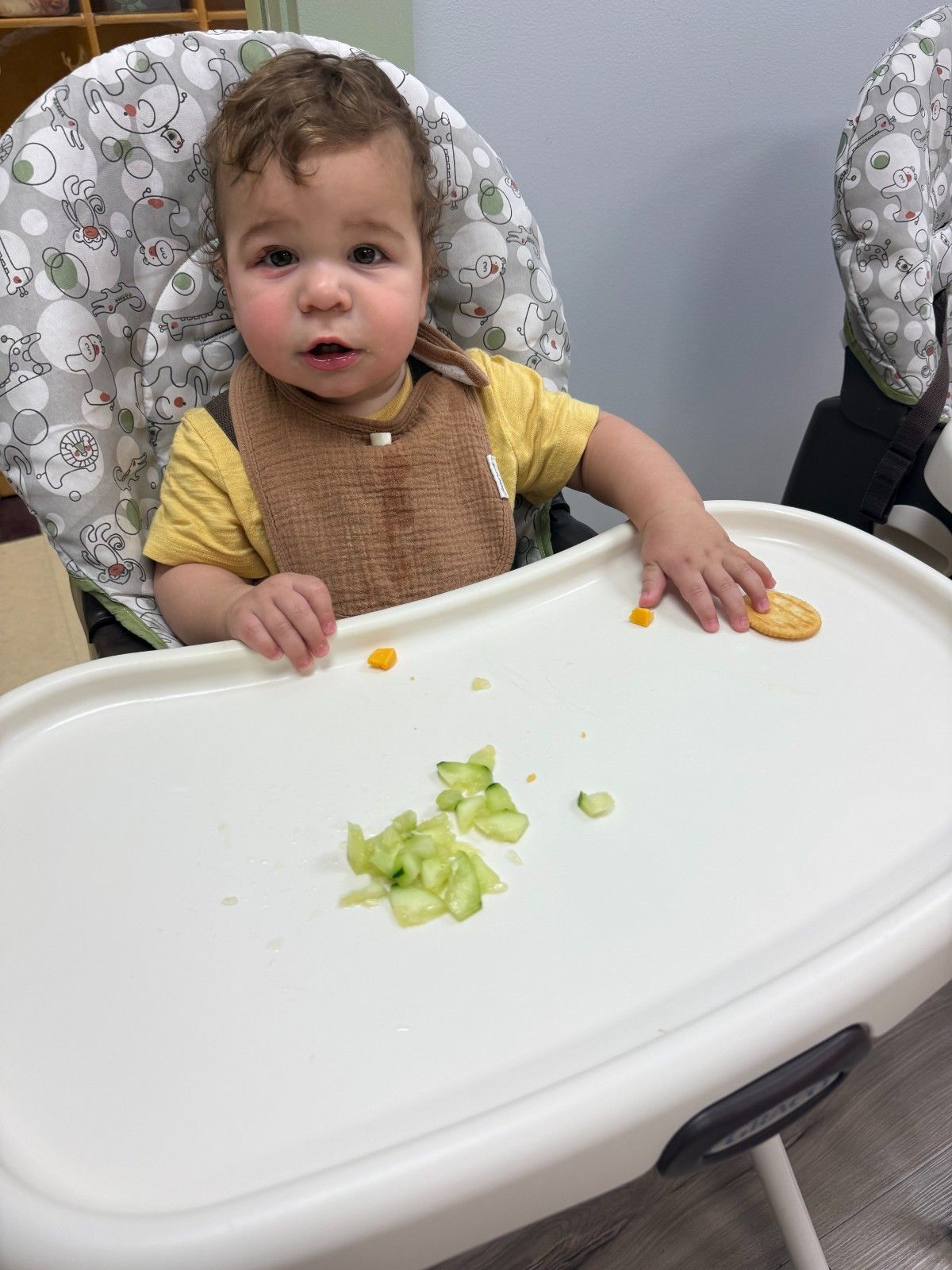
It isn’t only about the baby. Parents get something from daycare as well. Teachers share daily notes, like when a bottle was given, how long naps lasted, and even little milestones. 

One father in Irvington told us how meaningful it was to get a picture of his daughter trying sweet potatoes for the first time while he was at work. Home care can be personal, but it rarely offers that steady communication.


Final Thought

Home care has its comforts, but many families choose a baby daycare in Irvington, as it offers safe routines, peer interaction, and learning with steady communication. For parents, it feels like the right balance of nurturing care and growth.


Frequently Asked Questions

How does baby daycare support development?

Daycare infants learn through stories, music, and sensory play. Teachers facilitate these activities to promote social development, linguistic proficiency, and motor abilities.

Why do Irvington families often choose baby daycare over home care?

The structure and learning opportunities that are more difficult to establish in home care are valued by parents.

Is baby daycare in Irvington flexible for parents?

Yes. There are a range of enrollment options including two days a week, three days a week, five times a week, or only school hours as opposed to our full 7 AM to 6 PM day. You can choose the times that are most convenient for you. 

Categories
Preschool

How Play-Based Preschool in Sleepy Hollow Helps Children Learn and Thrive

Parents in Sleepy Hollow often want to know what we mean when we say “play-based preschool.” On the surface, it sounds simple: children playing. But when you look closer, you see how much learning is happening. 

At our play-based preschool in Sleepy Hollow, play is not a break from learning. It is the way children learn.


Learning That Doesn’t Feel Like Lessons

Children are wired to explore. Instead of worksheets, we give them real experiences. A pile of blocks teaches balance and problem-solving. Pretend play in the kitchen corner builds language, patience, and cooperation. A paintbrush in a small hand strengthens the muscles needed for writing later. 

From a child’s view of the world they are playing and exploring all day. From an adults’ view of the world, children are immersed in well rounded learning experiences encompassing the core early childhood learning areas: social-emotional, physical, cognitive, language, literacy, mathematics, science, social studies, and the arts.

Parents have shared how children’s curiosity and knowledge expands dramatically after only a short time at Discovery Village. From blocks, they explore architecture. From hand-washing they discover the wonders of water, branching out into life under the sea, rain clouds, and gardening. By following children’s interests, worlds of possibility open.

To children, it’s just fun. To parents, the conversations and learning children bring home are proof that play builds skills without the pressure of “lessons.”


Social and Emotional Growth

Play is also where children practice being part of a group. They wait for turns, share space, and solve problems with friends. These small things become the roots of patience and empathy.

We see shy children start slowly. First, they watch. Then they smile. Then one day, they join in. Children who once clung to their parents now run to “cook breakfast” with friends in dramatic play. 

Parents tell us they notice changes at home too. Children suddenly invite siblings into games or show more confidence when speaking up.


What a Day Looks Like

Classrooms are arranged for discovery. There’s an art table, shelves of blocks, and a cozy corner for reading. 

Projects are planned by teachers based on the interests of the students. When intrigued by outer space, children may build spaceships out of cardboard boxes. When interested in animals, they might design a farm. Interests are varied and explorations last for as long or as short as they captivate children’s imaginations. 

Each child also has individual goals, and teachers track their progress by observing them playing. There are daily class meeting times when –  through music, movement, and storytelling – children learn literacy and math skills. Teachers also organize daily science experiments and art projects, immersing children in creativity.

Even snack time carries lessons. Pouring milk into a cup (and sometimes spilling) teaches independence and measurement. Sitting together and passing food builds kindness. 

Parents tell us their children bring these habits home: excitedly talking about what they are learning, sharing food at the table, or singing new songs at bedtime.


Final Thought

A play-based preschool in Sleepy Hollow is about far more than play. Through blocks, stories, music, and shared routines, children gain confidence, friendships, and skills that last well beyond preschool. 

Families choose this approach because it makes learning joyful while preparing children for kindergarten and for a lifetime of curiosity.


Frequently Asked Questions

How does a play-based preschool prepare children for kindergarten?

Children practice literacy, math, problem-solving, and cooperation through play. By kindergarten, they are ready for routines, curious, and self-assured.

What does a typical day look like in a play-based preschool?

The day includes outdoor activities, storytelling, music, art, dramatic play, and construction. To make learning feel organic and interesting, teachers design activities around the interests of their students.

Why do parents favor play-based preschool programs in Sleepy Hollow?

Parents prefer play-based preschool programs in Sleepy Hollow because they see improvements in confidence, independence, and friendship. Children develop a lifelong love of learning as they learn new things while having fun.

Categories
Infant

How Sleep and Feeding Are Managed at an Infant Daycare in Tarrytown

Parents often tell us that sleep and feeding are their biggest concerns when considering infant daycare in Tarrytown. It makes sense. Those two routines shape so much of a baby’s day. At Discovery Village, we see sleep and feeding not as tasks to get through but as moments to nurture comfort, growth, and trust.


Sleep in Infant Daycare

No two babies nap the same way. Some drift off quickly, others take longer, and a few resist naps altogether. We don’t force a single routine on every child. Instead, we ask parents about their baby’s rhythm and do our best to follow it here.

Each infant has their own crib, labeled clearly, so it’s familiar and consistent. Teachers create a calm space: soft light, quiet voices, and gentle transitions. Safe sleep practices are always in place: babies rest on their backs, cribs stay clear, and teachers check often.

If a child needs extra comfort, we rock, hum, or offer a pacifier if that’s what the family uses at home. And because parents want to know how their child slept, every nap is logged. Families see exactly when their baby rested and for how long.


Feeding in Infant Daycare

Feeding is just as personal. Some babies eat every two hours, others wait longer between feedings. We prepare bottles of breast milk or formula according to family instructions. Everything is labeled, and offered on the child’s individual schedule.

When babies begin solids, we go slowly. Parents tell us which foods to start with, and teachers introduce them one at a time. Every feeding is written down, time, amount, and any notes, so parents have a complete picture at pickup.

Feeding isn’t only about nutrition. Teachers hold infants, look them in the eye, and speak softly as they feed them. These minor details transform an ordinary bottle into a trusting and connecting moment.


Why It Matters

Sleep and feeding are the backbone of an infant’s day. Good rest supports brain development. Consistent, responsive feeding helps babies feel safe and secure. 

At our infant daycare in Tarrytown, we treat these routines with the same importance as play or learning. By blending safety, care, and communication with families, we create rhythms that help children grow and reassure parents too.


Frequently Asked Questions

How are nap times handled at your infant daycare in Tarrytown?

We follow each child’s routine from home. Babies nap in their own crib, and teachers record times so parents know exactly how their child rested.

How do you manage bottle feeding and solids?

We give bottles of breast milk or formula on the child’s schedule. For solids, new foods are introduced slowly and only with the parents’ guidance.

What makes your approach to infant care unique?

We see sleep and feeding as opportunities for comfort and connection, not just routine care. Our teachers provide warmth, safety, and communication that families in Tarrytown can trust.